
Spotlight on Hilma af Klint
AnonymousUnknown author, Public domain, via Wikimedia Commons
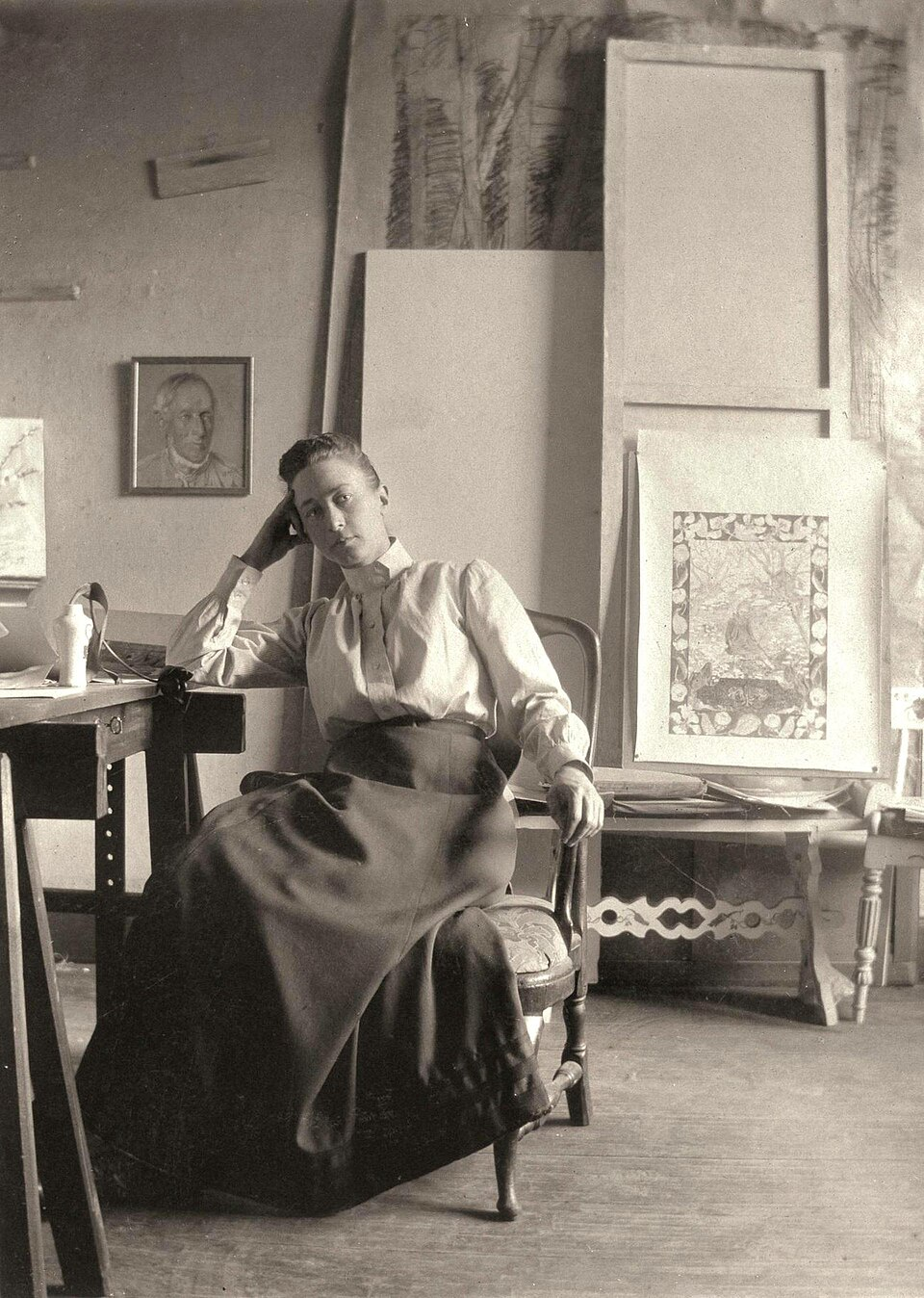
- Swedish artist and early abstract pioneer (late 1800s–early 1900s).
- Created visionary, symbolic paintings long before abstract art was popular.
- Her work explores spirituality, the unseen, and cosmic beginnings.
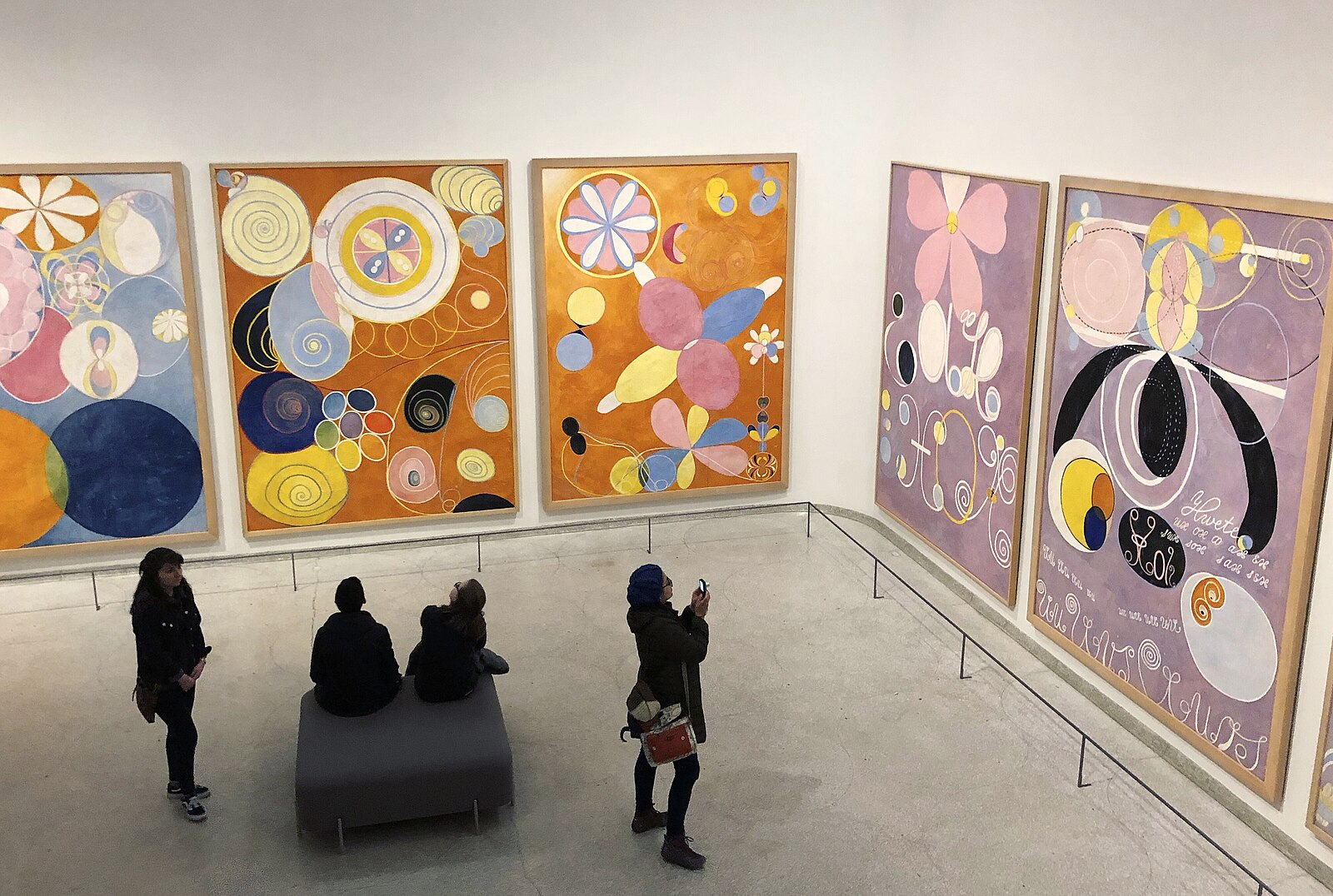
- Fluid shapes, spirals, and cellular forms in her art resemble microscopic life and natural processes.
- The Ten Largest series (1907) or Primordial Chaos (1906) — both evoke creation, cosmic energy, and the emergence of life.
- Flowing organic shapes representing fluidity and life’s beginnings.
- Use of color and form to suggest invisible energies and unseen forces.
- Abstract imagery that invites imagination about the unseen microscopic world.
 Ryan Dickey from Evanston, IL / Chicago, United States, CC BY 2.0 <https://creativecommons.org/licenses/by/2.0>, via Wikimedia CommonsActivity: “Create Your Own Visionary Origins Painting”
Objective: Students explore abstract shapes and colors to express their ideas about the origins of life.
Materials:
- Watercolors, tempera, or colored pencils
- Paper or canvas
- Optional: metallic paints or markers to mimic af Klint’s symbolic elements
- Show examples of Hilma af Klint’s paintings. Discuss how she used shapes and colors to represent life and the cosmos.
- Invite learner to imagine the earliest life on Earth — simple, invisible, mysterious.
- Encourage them to create abstract, flowing forms using colors that feel alive to them.
- Reflect on how abstraction can express scientific ideas in a new way.
- How do Hilma af Klint’s shapes and colors make you feel about the origin of life?
- Why might she have chosen abstract art instead of realistic images?
- How can art help us understand scientific ideas that are hard to see or imagine?