
Dot Stories of Early Life
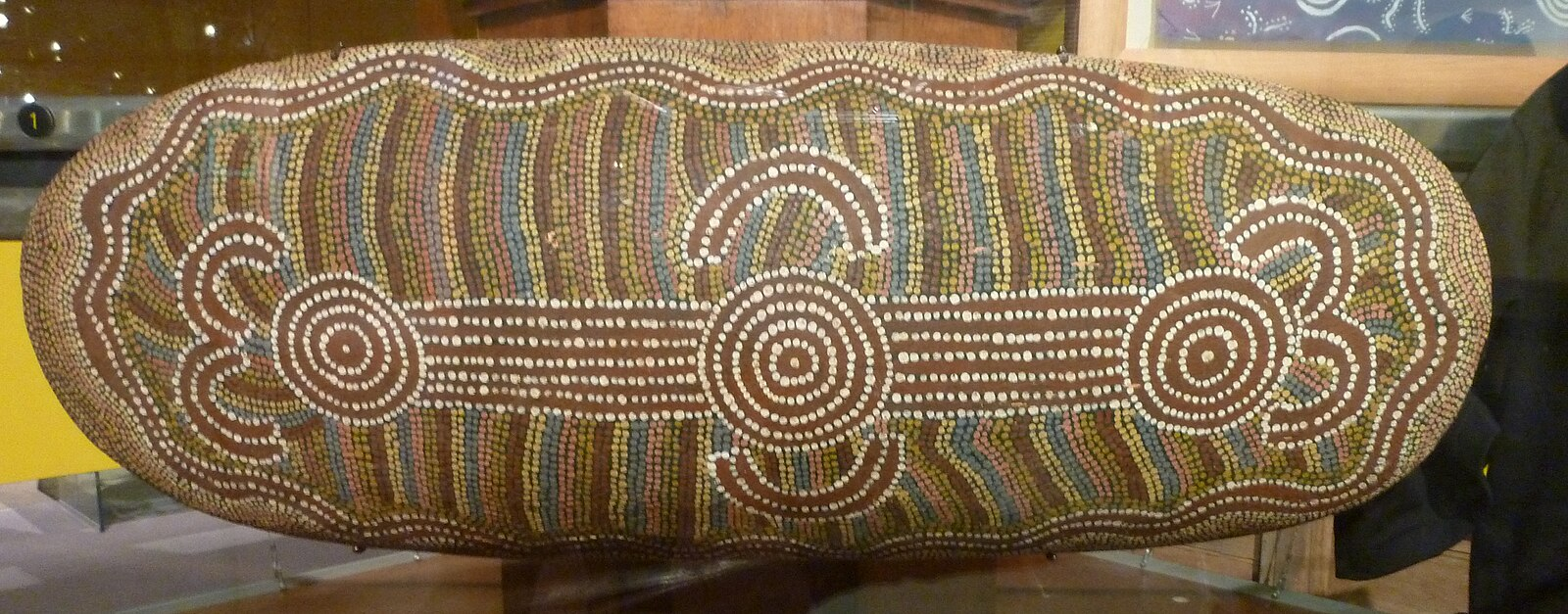 Schomynv, Public domain, via Wikimedia Commons
Goals:
- Learn how Aboriginal artists use dot painting to tell stories connected to nature.
- Explore how radial symmetry and pattern appear in both art and ancient life.
- Create a dot-style painting inspired by early multicellular ocean creatures.
- Respectfully explore another cultural art form with proper context and care.
Information on Aboriginal Dot Painting
https://japingkaaboriginalart.com/articles/aboriginal-dot-painting
Cultural Background (Present with Respect)
Aboriginal Australian art is one of the oldest continuous art traditions in the world. Many Aboriginal artworks use dots, lines, and circles to tell stories about the land, animals, people, and creation. These stories are often part of the Dreamtime—a way of explaining the origin of the world and the laws of nature.Dot paintings are deeply symbolic. The patterns may show tracks, waterholes, or ancient events passed down for generations. Each artist’s community has its own meaning behind the symbols.
Note for Students:
We are NOT copying Aboriginal sacred stories. Instead, we are appreciating and learning from the style and method to tell our own stories.
Show and discuss:
- Haootia
- Tribrachidium
- Dickinsonia
- Modern and ancient jellyfish/sea anemones
- What shapes do you see?
- Can you find circles, dots, or repeating patterns?
- Do these look like art you’ve seen before?
Materials:
- Black or brown construction paper
- Cotton swabs or paint dot tools
- Tempera or acrylic paint
- Optional: real fossil images or Haeckel radiolarian illustrations for inspiration
- Lightly sketch a radial shape—like a jellyfish, coral polyp, or invented soft-bodied creature or use the provided templates
- Use cotton swabs or the back of a paintbrush to fill in your design with dots.
- Encourage circular and spiral patterns to reflect symmetry and movement.
- Tell a short story or description to go with the painting (see below).
- Why do you think some early animals were shaped like circles or stars?
- What can art help us understand about science?
- Dot painting is a sacred tradition for many Aboriginal peoples. We are learning from the technique to inspire our own learning—not copying sacred symbols.
- Show a modern Aboriginal artist’s work and discuss how art can evolve while honoring tradition.