
Anomalocaris
The Weird Shrimp Thing That Wasn’t a Shrimp
Junnn11, CC BY-SA 4.0 <https://creativecommons.org/licenses/by-sa/4.0>, via Wikimedia Commons
Goals- Understand what Anomalocaris was and why it confused scientists.
- Identify features that made Anomalocaris a top predator in the Cambrian oceans.
- Learn how paleontologists can revise their understanding over time.
Vocabulary
- Anomalocaris – An extinct marine animal from the Cambrian period, once mistaken for multiple creatures.
- Predator – An animal that hunts and eats other animals.
- Adaptation – A trait that helps an animal survive in its environment.
- Paleontology – The science of studying ancient life through fossils.
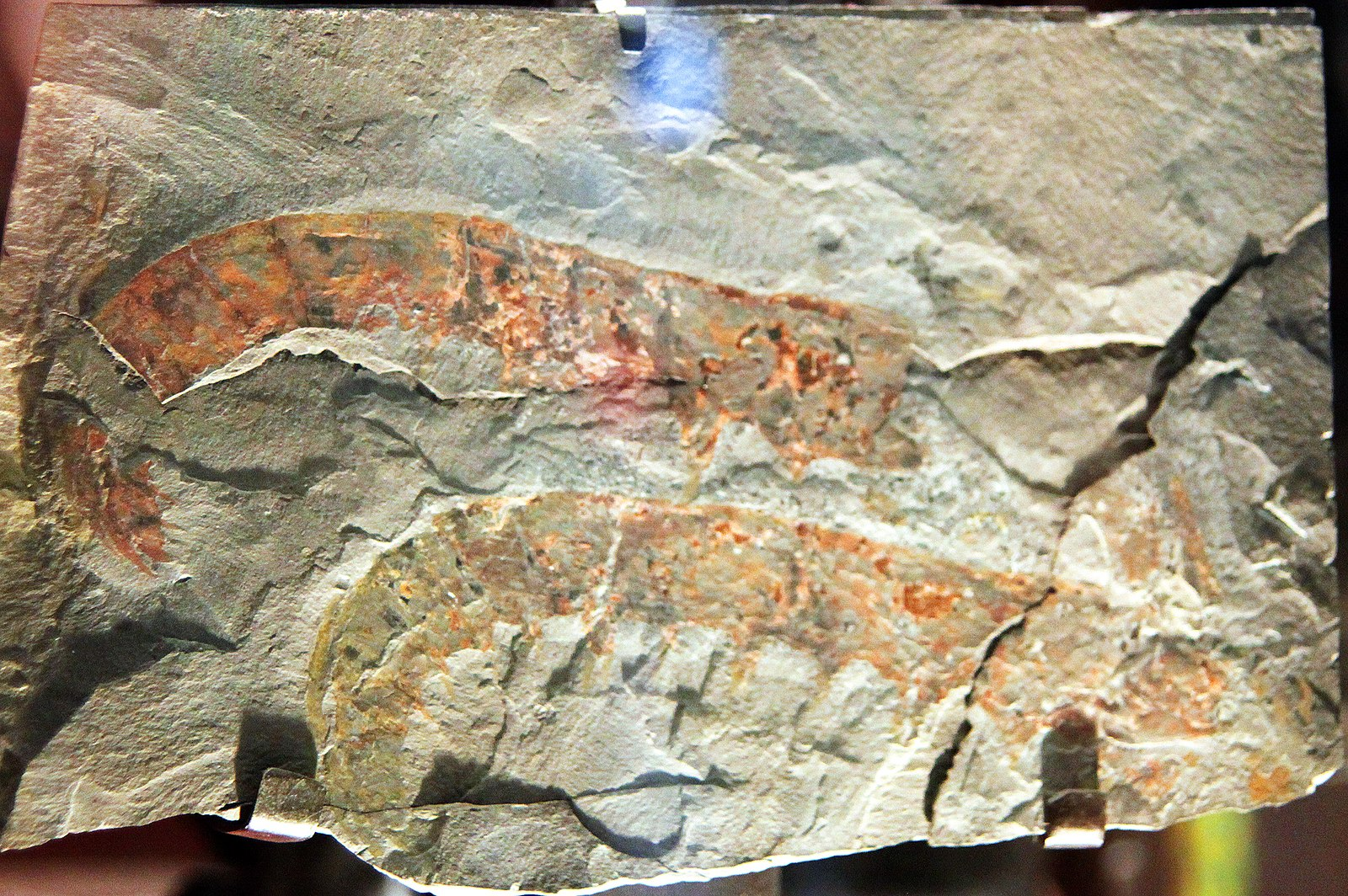
When paleontologists first found parts of Anomalocaris, they didn’t realize they belonged to the same animal:
- The mouth looked like a jellyfish.
- The frontal appendages were thought to be shrimp.
- The body was thought to be a worm.
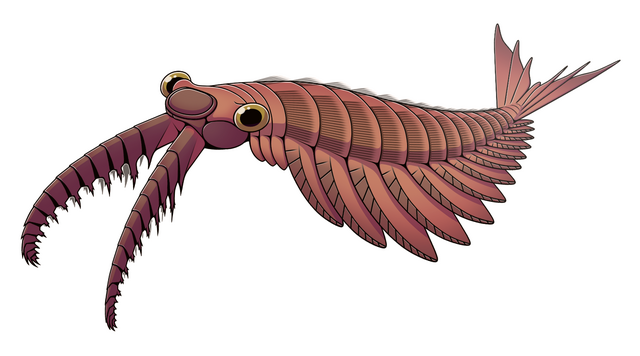
Show an image or model of Anomalocaris. Discuss its key parts:
- Large, torpedo-shaped body
- Fringed flaps along the sides for swimming
- Big, round eyes (compound eyes!)
- Grasping front claws (like shrimp arms)
- Circular, spiny mouth
- How do you think it caught its prey?
- What animals today swim or hunt in similar ways?
Tim Evanson, CC BY-SA 2.0 <https://creativecommons.org/licenses/by-sa/2.0>, via Wikimedia Commons
- Why do you think scientists thought these were three different animals?
- What changed when they realized they all fit together?
- Science is always learning and revising. Fossils are like puzzles with missing pieces and sometimes pieces are mixed up!
Create your own mixed up creature! What might paleontologists thought your creature was if it was missing a piece?
- Draw Anomalocaris and label at least three body parts.
- Write one fact about Anomalocaris, one fact about how it was misidentified, and one question you still have.
- Describe how paleontologists figured out Anomalocaris was a single animal.