
Literature Extension: Star Myths Around the World
 Goals:
- Compare and contrast star origin stories from two cultures
- Identify stars as a part of both science and storytelling
- Create their own star myth
- Recognize that different cultures have different ways of understanding the sky
- The Star People: A Lakota Story by S.D. Nelson
- How the Stars Came to Be by Poonam Mistry
Before Reading
- What do you think a “myth” is?
- Why do you think people long ago told stories about the stars?
- What happened in the story that led the characters to see the stars?
- How did the Lakota people explain the stars in this story?
- What do you think the “Star People” represent?
- How does this story explain the stars?
- What feelings do the illustrations give you?
- How is this story similar to or different from The Star People?
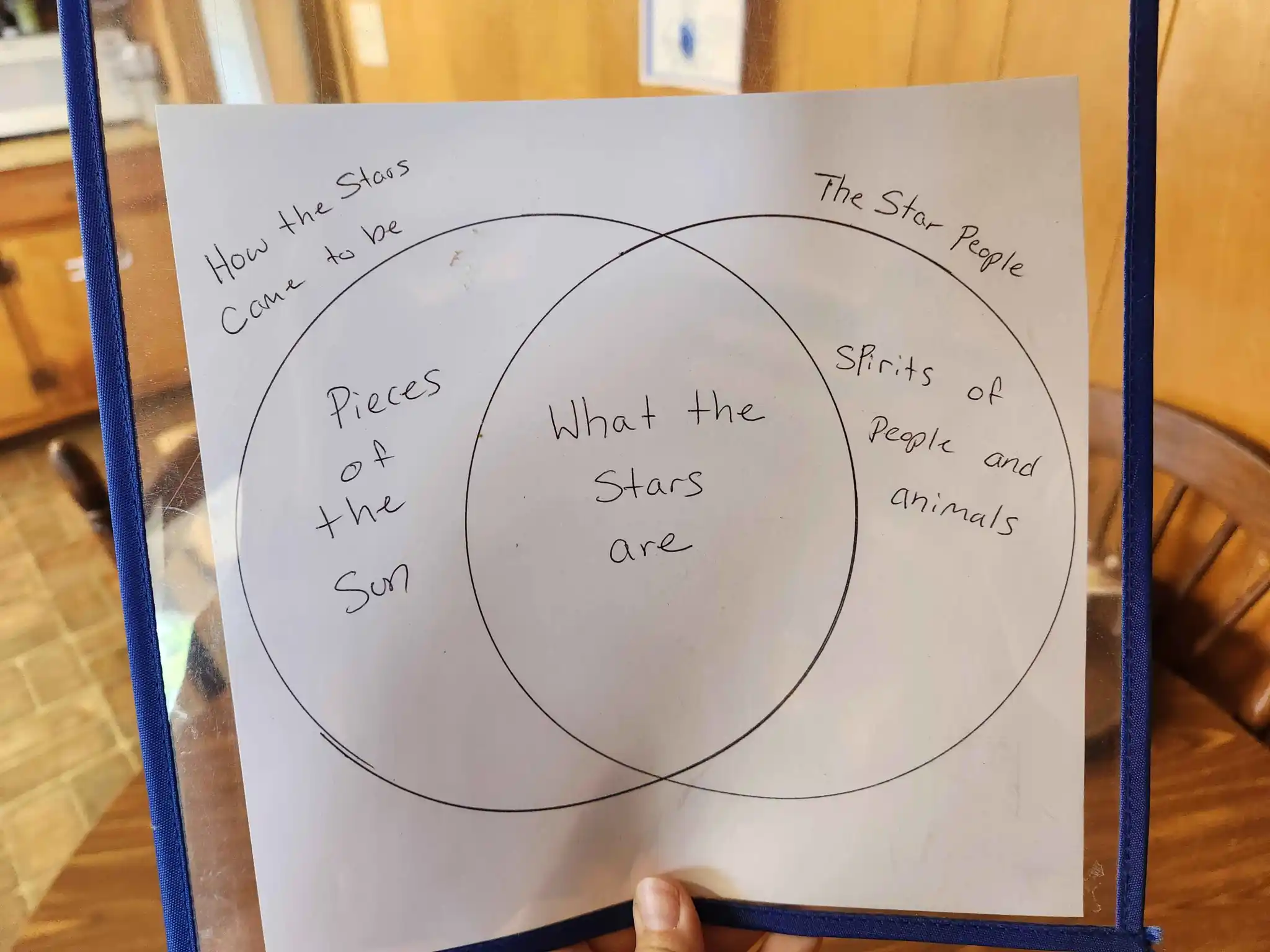
Story Comparison Chart
Create a simple Venn diagram or comparison chart like this one:
| The Star People | How the Stars Came to Be | Both | |
| Culture | Lakota | Indian (possibly Gujarati) | |
| Stars are... | Ancrestors who guide and watch | A gift from the daughter of the Sea King | Important in the Sky |
| Illustrations | Earth-toned, painted | Intricate, bright, geometric | Beautiful illustrations |
| Theme | Survival and guidance | Creation and balance | Explains stars |
Cultural Exploration
- Locate the Lakota people on a U.S. map (North/South Dakota)
- Look at Indian folk art (like in Mistry’s book) and compare the use of patterns and color
- Discuss why different cultures might tell different stories about the same sky
Create a Constellation Myth
Have your learner draw a picture using 6–10 star stickers or white dots on black paper. Connect the stars into a shape.
Ask: What does it look like? A bird? A fish? A dancing person?
Write a short myth that tells how it got into the sky.
Example Writing Prompt: "Long ago, before the stars lived in the sky, there was a _______ who..."